The Global Water Crisis: How Nonprofits Are Providing Clean Water to Millions
Water is the foundation of all human life and yet for over 700 million people around the world, safe, clean drinking water remains a daily struggle, not a given. The global water crisis is one of the most urgent and solvable humanitarian challenges of our time. It is not a crisis of scarcity in any absolute sense; the planet holds more than enough fresh water to meet every human need. It is a crisis of access, infrastructure, governance, and inequality. And nonprofit organizations are on the frontlines of solving it.
The Scale and Human Cost of the Water Crisis
According to the World Health Organization and UNICEF, approximately 2 billion people currently live without access to safe drinking water at home. In South Asia and Africa, regions where Our Aim Foundation operates, the crisis is particularly acute. Communities in rural Pakistan draw water from rivers contaminated by agricultural runoff and industrial waste. Villages in Malawi rely on hand-dug wells that dry up during drought seasons and become breeding grounds for waterborne pathogens during floods. In Bangladesh, arsenic contamination renders millions of groundwater sources toxic. The consequences are devastating and measurable: waterborne diseases including cholera, typhoid, dysentery, and diarrhea kill hundreds of thousands of children under five every year, most of them preventable deaths that would not occur if those children had access to clean water.
Our Aim Foundation’s Water & Sanitation Program
Our Aim Foundation has constructed over 2,900 water facilities across its program countries, making it one of the most active nonprofit water programs in South Asia and Africa. These facilities include deep boreholes drilled to access clean groundwater far below contaminated surface layers, hand pump installations that give communities reliable, low-maintenance water access, rainwater harvesting systems that capture and purify precipitation for drinking and sanitation use, and sanitary restrooms that provide dignity and privacy, especially for women and girls who face particular safety risks when open defecation is the only alternative. Each water facility is designed with community sustainability in mind. Our Aim Foundation trains local community water committees to maintain infrastructure, troubleshoot problems, and ensure that water access remains reliable for years, even decades after the initial construction.
WASH: Why Water, Sanitation, and Hygiene Must Be Addressed Together
The most effective nonprofit water programs do not treat water access in isolation. The WASH framework, Water, Sanitation, and Hygiene, recognizes that clean water infrastructure alone is not sufficient to achieve lasting health improvements. If people have access to clean water but continue to practice open defecation, contamination will still occur. If they drink clean water but do not wash their hands before preparing food, disease transmission will continue. Our Aim Foundation integrates hygiene education and behavioral change campaigns into every water and sanitation project it delivers. Community health promoters teach proper handwashing techniques, food hygiene practices, and the correct use and maintenance of latrines. These behavioral changes are inexpensive to implement and deliver outsized health returns, dramatically reducing rates of waterborne and sanitation-related disease.
Clean Water and Girls’ Education: A Critical Connection
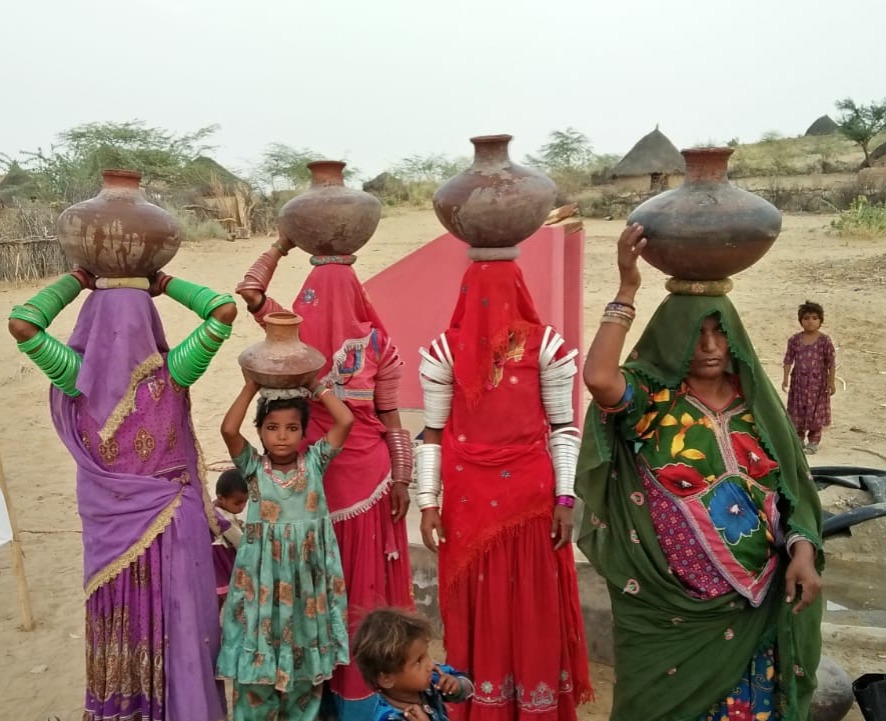
One of the most powerful and least-discussed benefits of nonprofit water programs is their impact on girls’ education. In communities without clean water access, it is typically girls and women who bear the burden of water collection, walking hours each day to fetch water from distant, often contaminated sources. This water-collection labor directly competes with school attendance: girls who spend their mornings walking to water sources cannot be in classrooms. When a nonprofit installs a borewell or water point within a community, the time savings are immediate and dramatic. Girls who previously missed school to collect water can now attend regularly. Female enrollment rates rise. Academic performance improves. And communities that once accepted female educational exclusion begin to see it as unnecessary and unjust.
Waterborne Disease Prevention: The Economics of Clean Water
Beyond the human cost of the water crisis lies an enormous economic burden. Communities where waterborne disease is endemic face reduced agricultural productivity, increased healthcare expenditure, lost school days, and diminished workforce participation. Children who survive waterborne illness in early childhood often suffer lasting developmental consequences that limit their educational and economic potential for life. Nonprofit water programs are, in economic terms, extraordinarily cost-effective interventions. Every dollar invested in clean water and sanitation generates an estimated $4 to $12 in economic returns through reduced healthcare costs, increased productivity, and improved educational outcomes. The business case for donating to nonprofit water programs is as strong as the humanitarian case.
Climate Change and the Future of Water Access
Climate change is intensifying the global water crisis in ways that make nonprofit intervention more urgent than ever. Changing rainfall patterns are making droughts more frequent and more severe in regions already water-stressed. Flooding events are increasing in frequency, destroying water infrastructure and contaminating clean water sources. Rising temperatures are accelerating glacial melt, threatening the freshwater supplies of hundreds of millions of people in South and Central Asia. Nonprofit organizations working on water access must increasingly design climate-resilient infrastructure, water systems that can withstand the extremes of both drought and flood. Our Aim Foundation’s water programs incorporate climate-resilient design principles, ensuring that the facilities it builds remain functional even as climate conditions deteriorate.
Join the Movement to Solve the Water Crisis
Clean water is not a luxury, it is a human right, and it is achievable in our lifetime with adequate resources and sustained commitment. A single borewell funded by donor contributions can provide clean water to hundreds of families for decades. A sanitation facility can restore dignity and safety to an entire school community. Your donation to Our Aim Foundation’s Water & Sanitation Program does not just provide water, it prevents disease, keeps children in school, frees women to pursue economic opportunities, and lays the groundwork for community development that extends far beyond any single project. Give today at ouraim.org and help us solve one of humanity’s most solvable crises.